Mission Hills' Andrés Pico Adobe Dates to the 1830s |
A restored sala, a rescue from demolition, and what to know before you visit |
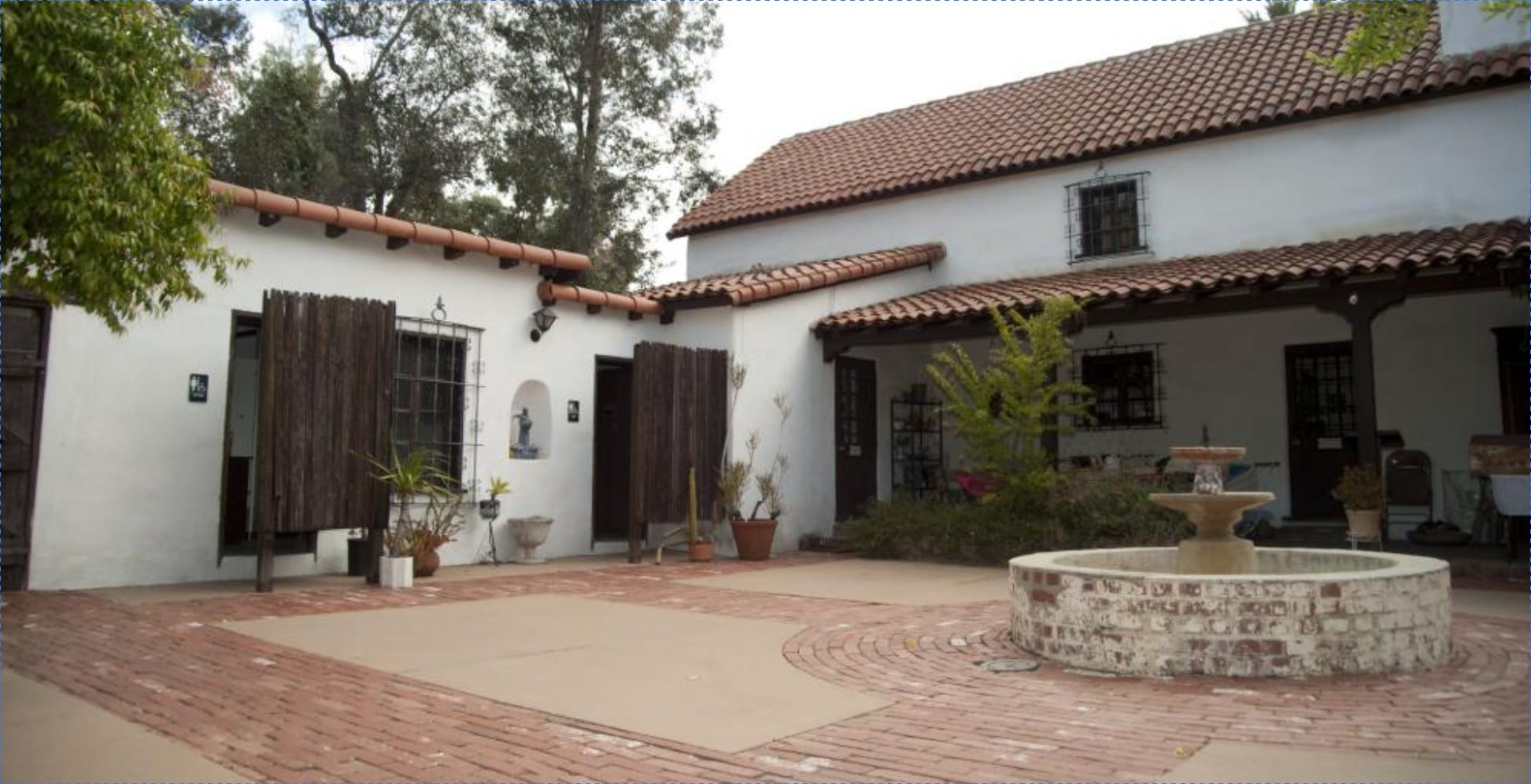
Tucked beside Sepulveda Boulevard in Mission Hills sits one of the oldest homes in all of Los Angeles.
The Andrés Pico Adobe, at 10940 Sepulveda Blvd., is described by the city as the second-oldest adobe home within L.A. city limits.
Its official name is the Rómulo Pico Adobe, after the adopted son who modernized it, but most people know it by the name of the better-known Pico.
A marker on the grounds calls it the oldest existing adobe home in the San Fernando Valley.
Its story runs through Native villages, Spanish padres, Mexican governors, wheat barons, an archaeologist and a close call with the bulldozer.
Before the adobe
The first people here were the Fernandeño, ancestors of today's Fernandeño Tataviam.
They were known for their fine basketry and for their skill at using the native plants around them.
Many were later brought into Mission San Fernando, and the Fernandeño name comes from the mission itself.
Spain claimed the Valley in 1769, when Gaspar de Portolá's expedition passed through on its way north.
Mexico later won its independence from Spain, and in 1834 its government secularized the missions.
A one-room mystery
No later than 1834, a one-room building went up near the mission, and Indigenous laborers from Mission San Fernando did most of the work.
That room is now the sala, the living room.
Nobody knows for certain what it was built for, whether a home, a storage room or part of the mission complex.
The original house was a single story about 45 feet long, set on a foundation of water-worn boulders.
Other sections rest on boulders mixed with mission tiles, and the north wing sits on mission tile alone.
The Picos and the Valley's biggest deal
In 1845, Andrés Pico, then a 35-year-old rancher living in the Pueblo of Los Angeles, and his partner Juan Manso were granted a nine-year lease on the former mission lands.
That lease covered nearly the entire San Fernando Valley, and Andrés ran cattle there and made the mission his base.
His older brother Pío was governor at the time.
In June 1846, with war against the United States looming and Mexico short of money, Pío sold the mission lands to Eulogio de Celis, a Spanish-born merchant, for $14,000.
The city's own history of the adobe tells it as a loan that was never repaid, while other historians describe an outright sale.
Either way, de Celis came away with 116,858 acres, essentially the whole Valley except Rancho Encino and Rancho El Escorpión.
The city's account calls it perhaps the best real estate deal ever made.
In the early 1850s, Andrés bought back an undivided half interest from de Celis for $15,000.
Sometime between 1846 and 1860, the dining room and the room that is now the library were added to the adobe.
Nobody can say by whom, though de Celis himself is a good guess.
Here is the twist: history suggests Andrés never lived in the house that carries his name.
He preferred the long building at the mission, where the gregarious general had room to entertain.
From wheat fields to a family home
In 1862, Andrés sold his interest in the Valley to his brother Pío.
Pío held it until 1869, when he sold his half to the San Fernando Farm Homestead Association, led by Isaac Lankershim and Isaac Van Nuys.
They turned the south half of the Valley into wheat country, with seven large ranches, and were soon shipping grain as far as Liverpool, England.
The land around the adobe stayed in the Pico family and became known as the Pico Reserve.
In 1874, Catarina and Rómulo Pico, adopted children of Andrés, married and moved into the adobe.
They gave it a modern makeover, adding a kitchen, two wings and a second floor.
They also laid a wooden floor right over the old mission tile, among other American-style improvements.
The couple lived there until the late 1800s, and after that the house changed hands, was rented out, and finally stood empty.
Ruin, and an unlikely rescuer
By the 1920s the abandoned adobe had been battered by weather and picked apart by vandals and treasure hunters.
Some dug up the floors and knocked down walls looking for buried gold.
Then, in 1930, came Dr. Mark Raymond Harrington, the archaeologist and Southwest Museum curator.
He and his wife had been hunting for an adobe to restore, and when they found this one they knew it was the right house.
They persuaded the Lopez family, who then owned it, to sell.
Harrington aimed to restore the house in true adobe style, with as much early California atmosphere as possible.
In doing so, he set its character back about fifty years, to before the Pico remodel.
The walls were repaired with bricks made from soil on the property.
The joists, rafters and ridgepole were made extra heavy and tied together securely.
Harrington also made the biggest discovery of the project, finding the old mission tiles about 10 inches beneath the rotted wooden floor.
His experience let him date those tiles to 1834 or earlier, which helps explain the age claim on the house today.
The mix of foundations and floors, some tile and some wood over adobe, is itself evidence that rooms were added at different times.
Much of what visitors see now is Harrington's restoration.
The Harringtons eventually sold, and the adobe passed through the hands of several families.
Saved from the bulldozer
In 1957, the North Valley YMCA bought five acres that included the adobe and used it for offices.
By 1965 the Y had put the property up for sale, and the old landmark faced demolition.
The San Fernando Valley Historical Society tried to raise the money to buy it and fell short.
At the last moment, the City of Los Angeles purchased the property and saved the adobe.
City Council member Louis Nowell is credited with leading that fight.
The adobe is Los Angeles Historic-Cultural Monument No. 7, was listed on the National Register of Historic Places in 1966, and is California Historical Landmark No. 362.
The Society opened it as a museum in 1969, and the city finished a major restoration in 1997.
A living museum today
The Department of Recreation and Parks maintains the grounds and the building exteriors.
The Society, which has been preserving Valley history since 1943, manages the adobe itself, including the restored interior and its programs.
That makes it a true living museum, and it is a big reason you can step inside instead of peering over a fence.
Beyond its regular open hours, the adobe hosts the Society's monthly meetings, which are open to all, along with weddings, receptions, breakfasts, dinners and picnics.
Rancho Days on the third Sunday of September brings early California life to the grounds with exhibits, demonstrations and food.
Las Posadas, the Mexican Christmas procession, is held on the Saturday before Christmas, which falls on Dec. 19 this year.
Another piece of history sits on the grounds too, the Lankershim Reading Room, a small historic building rescued and moved here in 2001.
Planning your visit
The adobe is at 10940 Sepulveda Blvd. in Mission Hills.
Public hours are limited and have changed over the years.
The Historical Society's website lists Sundays from 1 to 4 p.m., but please call (818) 365-7810 or check with the Society before you drive over.
Mission San Fernando, the subject of our companion story on the long building, is a short walk away, so you can see both in one outing.
In a fast-changing Valley, a place that still feels like the 1800s is a rare gift.
Bring the kids, bring the out-of-town relatives, and give a nearly 200-year-old building the visit it has earned. |
0 Comments
Join the conversation
Be the first to comment
Share your thoughts above.