
Sylmar's Aqueduct Cascades Mark Where LA's Water Arrived in 1913 |
A hillside beside the 5 Freeway holds a piece of North Valley history from the day Owens Valley water reached the city |
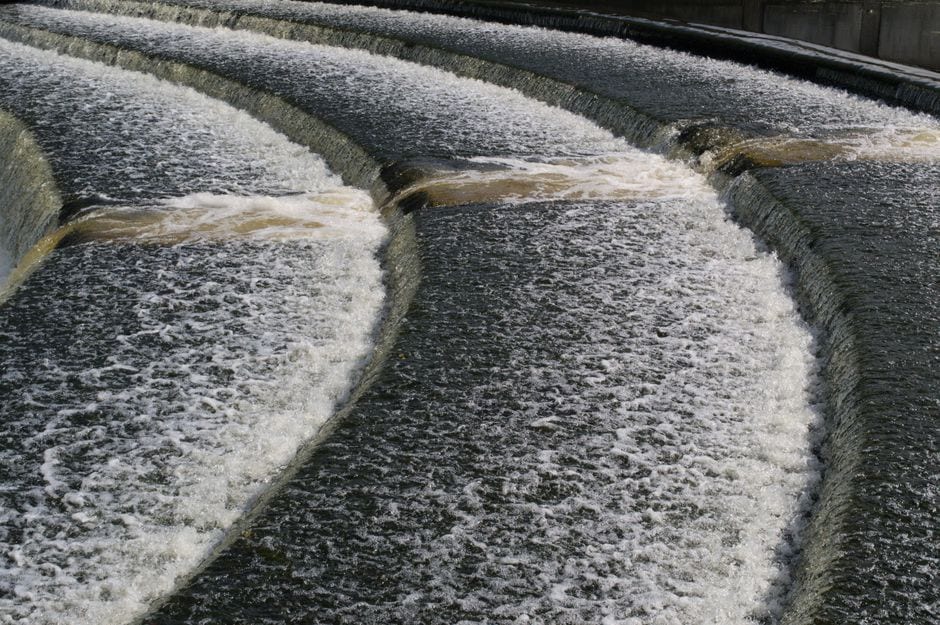
On November 5, 1913, water from the Eastern Sierra reached Sylmar and spilled down a hillside at the end of the Los Angeles Aqueduct.
That hillside is still standing today, and it is called the Cascades.
Anyone who has driven north on the 5 Freeway out of the San Fernando Valley has probably glanced at it without ever knowing what it was.
The aqueduct runs roughly 233 miles from the Owens Valley, and this slope is where that long journey ends and the city's own water system begins.
City water chief William Mulholland was the face of the project, and a crowd gathered in Sylmar that day to watch the first water arrive.
As the story is told, he turned to the mayor and said, in essence, that there it was and the city should take it.
A century later, in 2013, LADWP staged a centennial reenactment at the same spot, timed to the hour of the original event.
Look closely at the slope and you can pick out several generations of pipes and channels, including newer works built beside the original.
One source describes the site as a California Historical Landmark, which sounds right for a place this important.
To us, it is one of the great pieces of North Valley history hiding in plain sight.
Without that water, the Valley's orchards, subdivisions and everything that followed would look very different.
We could not confirm current public access, viewing areas or parking at the site.
Please confirm with LADWP before you go, and stay out of any fenced or restricted utility property.
For now, the easiest way to appreciate it may be a slow look from the road, and a story to tell the passengers about where the faucet water came from. |
0 Comments
Join the conversation
Be the first to comment
Share your thoughts above.